
TL;DR
The ETHRome hackathon proved to be a valuable event, offering strong insights and visibility for Polkadot. As a growing Tier 3 Ethereum event aiming for Tier 2 status in Southern Europe, ETHRome gathered around 130 hackers and 250 attendees, many of whom were introduced to Polkadot’s technology and branding for the first time, confirming its market fit and niche. It is important to note that ETHRome is a full IRL coding oriented hackathon, with many participants working until late hours in the morning to ship their code. DevCult considers an event to follow up closely, and, in particular, if the event organization adds a conference program which can attract more attendees and fosters technical and web3 cultural discourse.
The guests were exposed to Polkadot ( PVM ) technology and branding confirming the market fit and messaging niche for bringing the Smart Contract powerhouse of Polkadot.
With 17.5% of total submissions, Polkadot held its ground alongside other major sponsors (1inch, Base, iExec and other outstanding teams), maintaining competitive engagement levels. On the Polkadot participants side, some interesting projects were submitted which were pushed to the Parity-Post Hackathon support pipeline and, as a result of an in-person meeting in Rome, to the Magenta Labs BD pipeline.
On the insights front, learnings about Polkadot track structure, technology capabilities, synchronisation with product teams, messaging and competing sponsors’ approach were noted and taken into consideration for future projects.
In conclusion, the DevCult EVM event strategy should continue demonstrating a coherent and sustained effort which can result in medium-term success, both in terms of brand recognition and technology: Polkadot as a Tier 1 player in the EVM world.
ETHRome 2025 in numbers
When and where: 17-19th of October, in Rome, Italy
Attendees: 250+
Hackers: 128
Hackathon submissions: 11 of 57* ( 17.5% )
Prizes Awarded: 9 ( plus 1 Honorary mention )
Post hackathon leads generated: 7
Merch handled: 100% T-Shirts, 50% Stickers
Projects awarded in the main track: 0
Prize awarded of Polkadot prize pool: 78.97% / 6950 USD
Days from conclusion to last bounty payout: 10 working days for all the winners, except one team that was affected by a Subwallet bug, pre AH migration.
New users in discord and Telegram (17-19 October): 109
Final Cost: 53816 USD im total, including 12580 USD sponsorship cost and 6950 USD hackathon prizes
Hackathon projects accessible here ( after login )
The Hackathon Team
The DevCult team (Boris, Daniel, Denis, and Sacha) organised and led the ETHRome hackathon. They were supported on-site by Parity engineers Dragan and Nemanja, and remotely by Nick Kozloz. Everyone on location actively engaged with participants, from booth interactions to technical support and mentorship. The combination of diverse skills, backgrounds, and perspectives proved to be a strong team point, enabling us to offer hackers a wide range of valuable insights.
Other teams and agents worked in the back office for this event to happen: Radha and the W3F, Rebecca and Dee from Parity, and the Events Bounty team.
The booth

DevCult deployed their usual small but big booth strategy at ETHRome. It is both a DevRel HQ for hackers to get technical and product mentorship, but also a bidirectional device to gather brand feedback and push Polkadot narratives and information.
In general the guest engagement in the booth and the hacker space was positive, as many of the guests discovered that Polkadot is in the Solidity game. The EVM world is totally un-aware of the Solidity capabilities of Polkadot. PolkaVM and its RISC-V architecture - and JAM to some extent - brought attention and curiosity from the attendees. But the attendees were also interested in other topics: some protocol-level people were interested in W3F research topics, and newcomers were interested in educational programs like PBA-X.
There is a recurring question from attendees we consider mission critical to give a relevant and unified answer:
“Which are the benefits of deploying in Polkadot? Why should I bother to migrate?”
But also regarding Polkadot knowledge many attendees referred to outdated concepts and technologies of Polkadot like parachain auctions and crowdloans.
On the not so positive general comments: ecosystem is indeed famous for its marketing expenditure, technology complexity, the lack of ecosystem entry points, high entry barrier and the difficulty of navigating for newcomers are recurring points from guests.
Regarding merchandise, people praised the design and grabbed T-Shirts and Stickers. The guests liked the T-shirts and wore them during the hackathon. Polkadot was the only team with event specific merchandise and visuals, which in the future should be evaluated, and adjusted accordingly to the event reach and impact.
The hackathon
The DevCult team launched 3 different tracks to attract hackers to deploy in Polkadot using PVM technology. Porting existing contracts, original Smart Contract and Meta Smart Contracts/Tooling track. The objective of the hackathon was defined as triple: brand positioning, tech and documentation feedback and hacker onboarding to Solidity in Polkadot.
Reports from the technology trench - Technical Feedback
The hackathon technical feedback revealed both strengths and critical gaps in the Polkadot developer experience, particularly for EVM-native developers encountering the ecosystem for the first time.
Documentation Gaps
Documentation emerged as a persistent pain point. While organised at a surface level, Solidity compatibility remains unclear, and XCM concepts are insufficiently explained for newcomers.
Developers struggled to navigate between test networks, with some block explorers listed in documentation unavailable on testnets. The absence of an explicit compatibility matrix — particularly around Foundry support — created friction and false starts. As one developer noted: “You need to explicitly list which popular ETH tools are supported and which are not.”
XCM Integration Challenges
Cross-chain messaging proved particularly challenging. Developers found virtually no comprehensive XCM examples, tutorials, or reference implementations on testnets. Last minute we deployed a minimal DID on Paseo People Chain, otherwise it highlighted the lack of ready-to-use testnet infrastructure from ecosystem parachains like OriginTrail, Peaq and Hydration. Without an idea pool or code snippets, XCM remained theoretical for most participants.
Infrastructure Friction
Several infrastructure issues compounded developer frustration. The Paseo faucet’s 5K PAS limit proved insufficient for validator setup requiring 100K PAS, while rate limiting on shared hackathon WiFi made it nearly unusable. NFT deployment hit unexpected contract size limits (77KB vs 49KB max). Foundry compiler issues persisted despite documentation suggesting compatibility, and devcontainer spin-ups occasionally stalled indefinitely.
Testnets Navigation Confusion
The proliferation of similarly-named networks created cognitive overload for newcomers. Developers expressed confusion distinguishing between “Asset Hub”, “PAsset Hub - Contracts”, “Passet Hub, “Bridge Hub”, “Westend” and other testnets. Multiple RPC endpoints listed in wallets proved non-functional, with only the official testnet-passet-hub.polkadot.io endpoint working reliably.
Several RPC endpoints and explorers mentioned in documentation were not functional. Subscan support had been deprecated for Passet Hub, leaving Blockscout as the only reliable option, which complicated debugging XCM and contract deployment.
GitHub/devcontainer issue
Occasional GitHub rate limits and devcontainer setup bugs further slowed local environment setup.
Path Forward
The feedback points to clear priorities: general docs and navigation improvements, comprehensive XCM documentation with working examples and testnet infra, explicit tooling compatibility matrixs, streamlined testnet infrastructure with pre-deployed ecosystem parachains, and improved error messaging throughout the stack. The human element, responsive, expert support, proved invaluable and should remain central to the hackathon strategy.
Bright Spots
Amidst the technical challenges, onsite developer support received unanimous praise. The presence of knowledgeable DevRel team members and Parity engineers at the booth made the difference between abandoned projects and working implementations.
Marketing and Reach insights - “With a little help from my friends”
The marketing efforts consisted of 4 different axis.
- Collaboration with the ETHRome organisation in the event reach, and participating in live stream, presenting Polkadot tracks and technology. The live streaming accumulated 324 views.
- Traditional journalist techniques, like a Press Release ( reviewed and published in Polkadot.com by Distractive)
- Original and fresh twitter media campaign
- Collaboration and support with Polkadot ecosystem agents like W3F, Parity, Polkadot Editorial Board, Distractive and other individuals for maximise reach.
Following the same design and art direction guidelines of the visual design, the social media marketing visuals clearly referenced themes from ancient Rome. A humorous, absurd, and ironic reinterpretation of ancient Roman and mythology sculptures was introduced to capture the audience’s attention in a playful yet original resonant way.

In retrospect, as it is normal in a low-follower account, most of the reach was achieved when other heavyweight accounts reposted our content ( ETHRome, Polkadot, Parity, Polkadot Italia, … ). The combination of direct and indirect references to the hackathon, made the social media campaign a success.
| Comments | Reposts | Likes | Views | |
|---|---|---|---|---|
| Direct | 5 | 30 | 164 | 15689 |
| Indirect | 44 | 143 | 834 | 96070 |
All the metrics — direct and indirect — can be consulted here. The metrics were taken on October 30th. No paid marketing was done.
In addition, a journalist of 99Bitcoins online magazine approached the DevCult team for material for their publication. The article is published here.
Meetups
As part of the DevCult strategy of ignite local partnership, DevCult contacted and allied with Polkadot Italia community
Remote Guest for 10th October - Polkadot Italia Meetup at Urbe.eth
DevCult contacted the Polkadot Italia team to explore a collaboration for the ETHRome hackathon. Damiano ( Yamne ) and The White Rabbit were very helpful and they dove into the organisation and the marketing push on social media. They contacted the hackathon organisers (urbe.eth) and secured a slot on October 10th. This meetup was part of a bigger talks and technical workshop hackathon warm-up framework. The meetup, conducted by Damiano who joined remotely, combined Polkadot Builder Party & Road to Sub0 in situ content and ETHRome and EVM content, remote by the DevCult team.
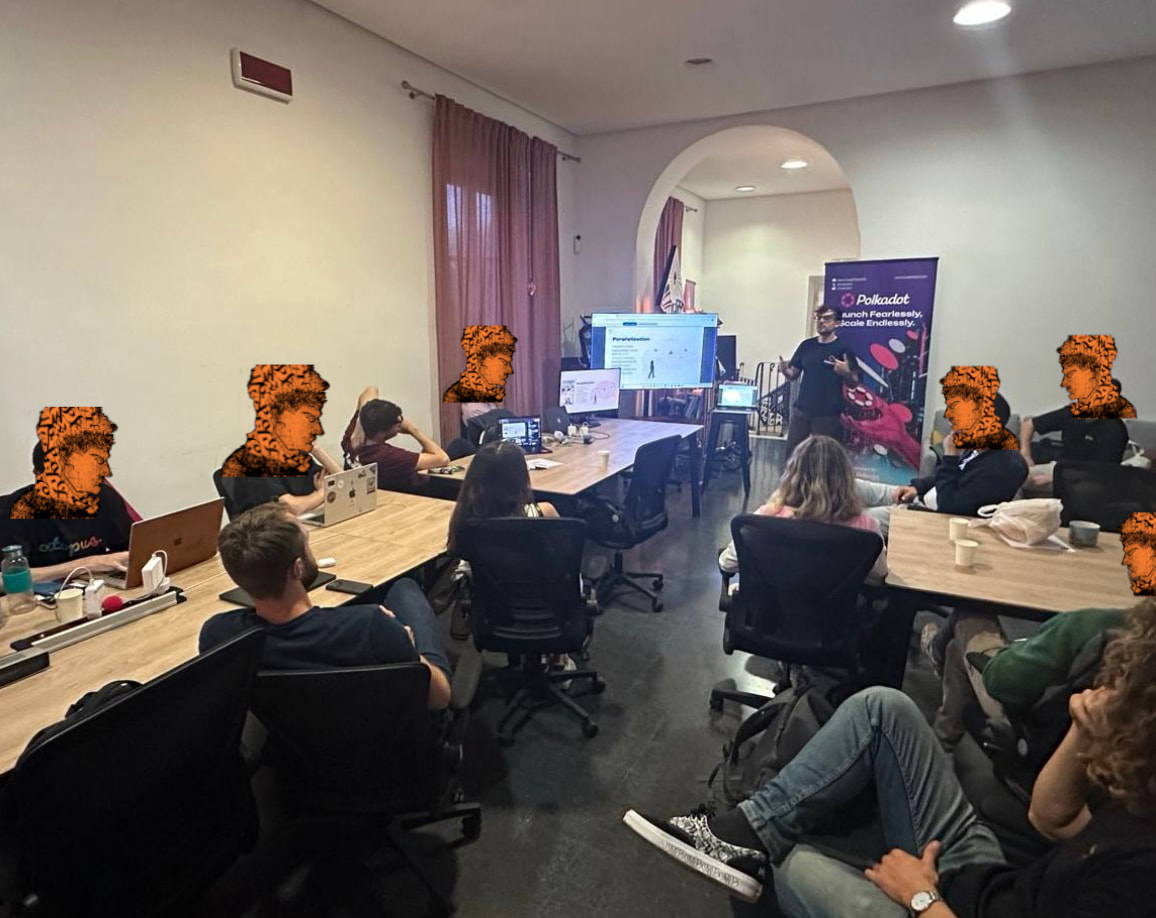
The meetup gathered around 20 people and generated good online traction.
DevCult is aware that Polkadot Italia are in contact with urbe.eth ( organisation of the hackathon and Ethereum community in Rome) to explore further collaborations in terms of a meetup series. DevCult encourages a sustained and coherent effort — like the one made by Polkadot Italia — in terms of meetups and technical workshops to activate and gain traction around Polkadot, both in its Cloud and Hub versions. DevCult is grateful for all the support received from the Polkadot Italia crew.
IRL Polkadot Meetup at Vicenza - 15th of October
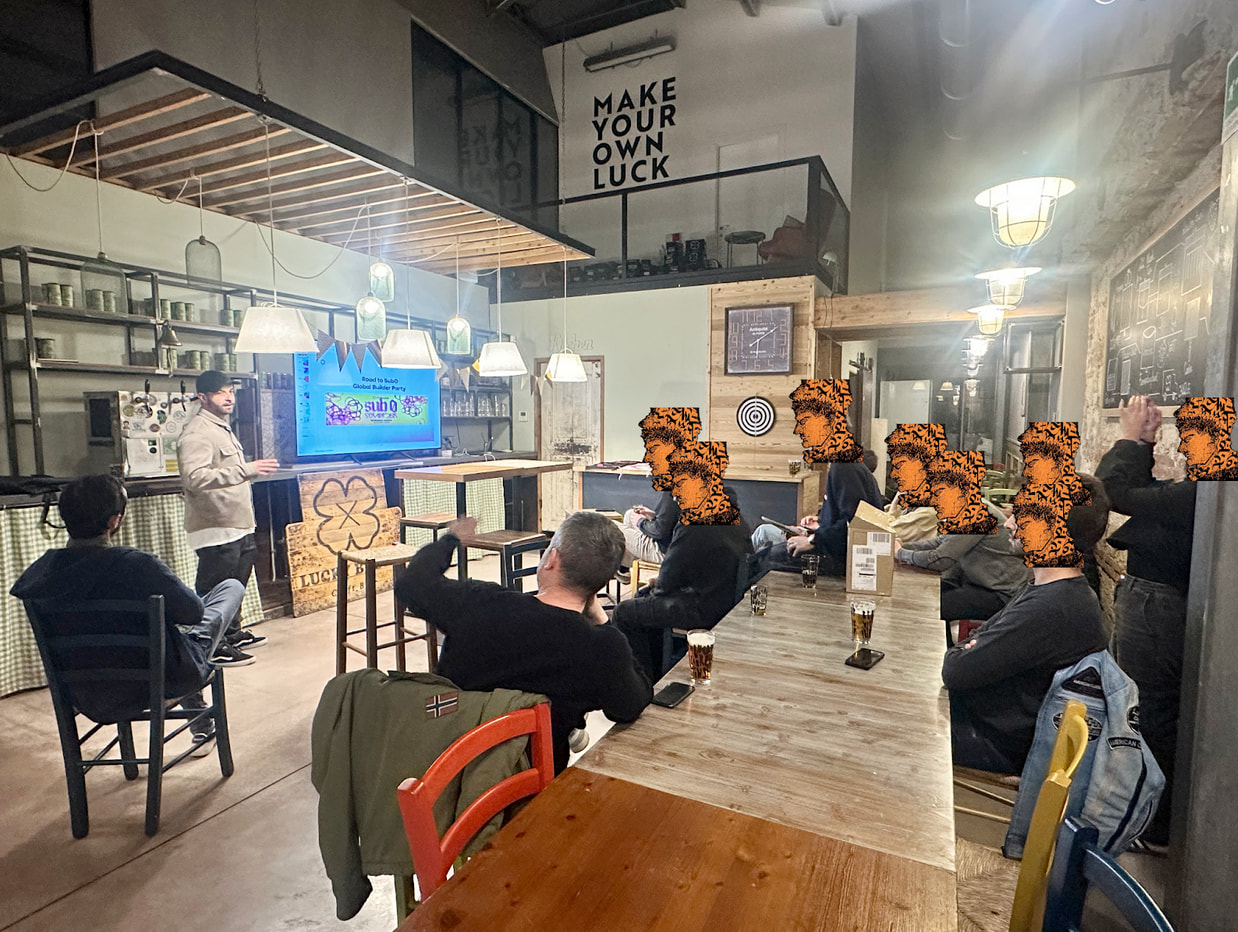
DevCult assisted as speaker to the meetup organised by Mr. Acid (@mraciditaly) in Vicenza on October 15th. The organisation of the event was flawless, prepared content about Polkadot and “Road to Sub0” was delivered to the attendees ( around 10-15 web3 enthusiasts, which for a minor metropolitan area with no regular web3 background or context, we consider a success). DevCult engaged in an interactive discussion with the audience about Web3 values, Gav’s vision, and how Polkadot represents these principles. In top of the Polkadot message delivery to the audiences, DevCult still considers it culturally crucial to engage and discuss the profound social implications the Web3 technology brings to society, and how it can model the next decades.
In conclusion, DevCult considers it highly valuable and impactful in the medium term to collaborate, dynamise meet-ups and technical workshops with local communities, wherever DevCult organises an event. Building context and network are relevant for extending developer outreach and the best of Polkadot community cultural values and vibes.
Insights
What went well
Overall, the event went well, with all the different aspects working effectively. The team gathered valuable brand and technical feedback from the attendees. The Polkadot tracks had a decent number of submissions (17.5% at the time of the submission deadline), and the presence of the DevRel and mentoring team made a huge difference with other sponsor teams.
A very later Paseo and Passet Hub update was made before the hackathon, and when the DevCult team tested the network the day before the event, it discovered a critical bug which affected the entire hackathon. The team urgently contacted the Paseo team and Parity, thanks to their availability and diligence, the bug was resolved and the network could operate normally. We would like to thank PG, Parity and the Paseo teams, for their involvement in this issue.
The organisation of the event was flawless, with very good vibes.
What didn’t go not so well?
The uncertainty on which technology was about to be brought to the hackathon, affected various levels of the operation, but mainly the inability to gather feedback about REVM, which was the initial DevCult goal for this hackathon. As a result, PVM was made the center of the hackathon, and even some small advances were made after ETHBelgrade ( June ) and W3S ( July ), the technological paradigm was quite similar to the one previously showcased on these events.
The designs for the physical merchandise lacked clear readability of the main point of the hackathon (Build your Solidity App in Polkadot), sending an unclear visual message to the attendees.
The submission criteria and the tracks, compared to other sponsor competitors, were complex and technology focused instead of theme focused. They were focused on hackathon organisers rather than hackathon participants. The porting track needs a clear measure framework between PVM and EVM, as their gas structure is different. When this framework is solid, then it can be offered to hackers for benchmarking tests. The tooling track ended up being very remote from the rest of the hackathon, drawing not much attention from hackers.
For this kind of event, we consider PBA-X a very valuable entry point for the Polkadot ecosystem, which for different reasons out of DevCult’s control, could not bring to this hackathon..
What we have learned
Regarding the proposed tracks, DevCult considers the technology-focused approach exhausted. Moving forward, theme-based tracks offer a more compelling gateway—letting hackers chase broader challenges while discovering Polkadot’s capabilities along the way, rather than being asked just to play with the technology. In the same vein, other prize structures can be suggested to encourage competition for hackers, and make the Polkadot tracks more appealing. As it is relevant and insightful to see what other competitors do, for example, BASE had one track targeting the developments of applications for small businesses.
Themed rollups of determined verticals, i.e. Hydration/Stellaswap for DeFi, peaq for dePIN, Acurast for compute, OriginTrail for AI, etc, will allow XCM to show the real edge of Polkadot, and at the same time, allow hackers (and developers at home) to build area aligned products while using one the star features of Polkadot.
Regarding merch and marketing, it could be valuable to reflect on the size of the hackathon to adjust to the physical marketing footprint in the event. Even the merch and marketing budget was not so significant, it is relevant to understand the target event and its reach to optimise - not only budget but also the perception of marketing spending.
The demand for product guidance and product design framework, both for a hackathon context and beginners, is considerable. DevCult is going to dive into producing material for this area, strengthening its Project Clinic feature.
Dragan and Nemanja, the Parity-side mentors, provided very useful insights — not only from a tech perspective, but also from hacker experience, as they have been participating in various hackathons. DevCult listened actively and noted various ideas and improvements on track design.
Special Thanks - Without them, this event would not have been possible
This event has been co-funded by the Web3Foundation and the Events Bounty.
We would like to thank Radha and the Events Bounty team, Rebecca Turner, Dee, Ian Kane, Nick, PG, Cisco, Ale and the Paseo Team, Marco and Magenta Labs, Damiano, The White Rabbit and Mr. Acid from Polkadot Italia ( and the entire Polkadot Italia team).
Our eternal gratitude to all the people who retweeted and loved our X posts.
Infinite glory to Dragan and Nemenja for joining the developer safari.