In this post, I introduce the notion of “DOT alignment”. I will show that at the moment there is almost no DOT alignment between parachains. I will then discuss how we can develop a working economy of protocols that enter into value-adding / symbiotic relationships with the DOT token.
[Note: This is not a price discussion. It is a discussion about creating a DOT economy that works. Please stay focused on that in your comments.]
The two sides of the Tokenomics debate: Supply & Demand
There is ongoing debate about the tokenomics of DOT. So far, the discussion has mainly focused on the supply side with capping the total issuance and lowering inflation.
Very briefly, the supply side discussion revolves around:
-
How would an arbitrary supply cap influence stakeholder psychology? → Would they perceive DOT as a harder asset that is more worthwhile to participate in?
-
What is the proper price to pay for staking? → How much can we lower block rewards and still maintain high economic security. This is commonly reffered to as “lowering inflation”.
On the demand side, the discussion has been barely touched. The key questions is: “Why would someone have a demand to hold or use DOT?”. This question is not answered to satisfaction by simply referencing the basic utilities of DOT (tx fees, coretime, staking, governance). Instead, the question has to be considered in the much broader context of how it compares against the tokens of other ecosystems and their value proposition.
In short: What, exactly, gives value to DOT?
Current Situation
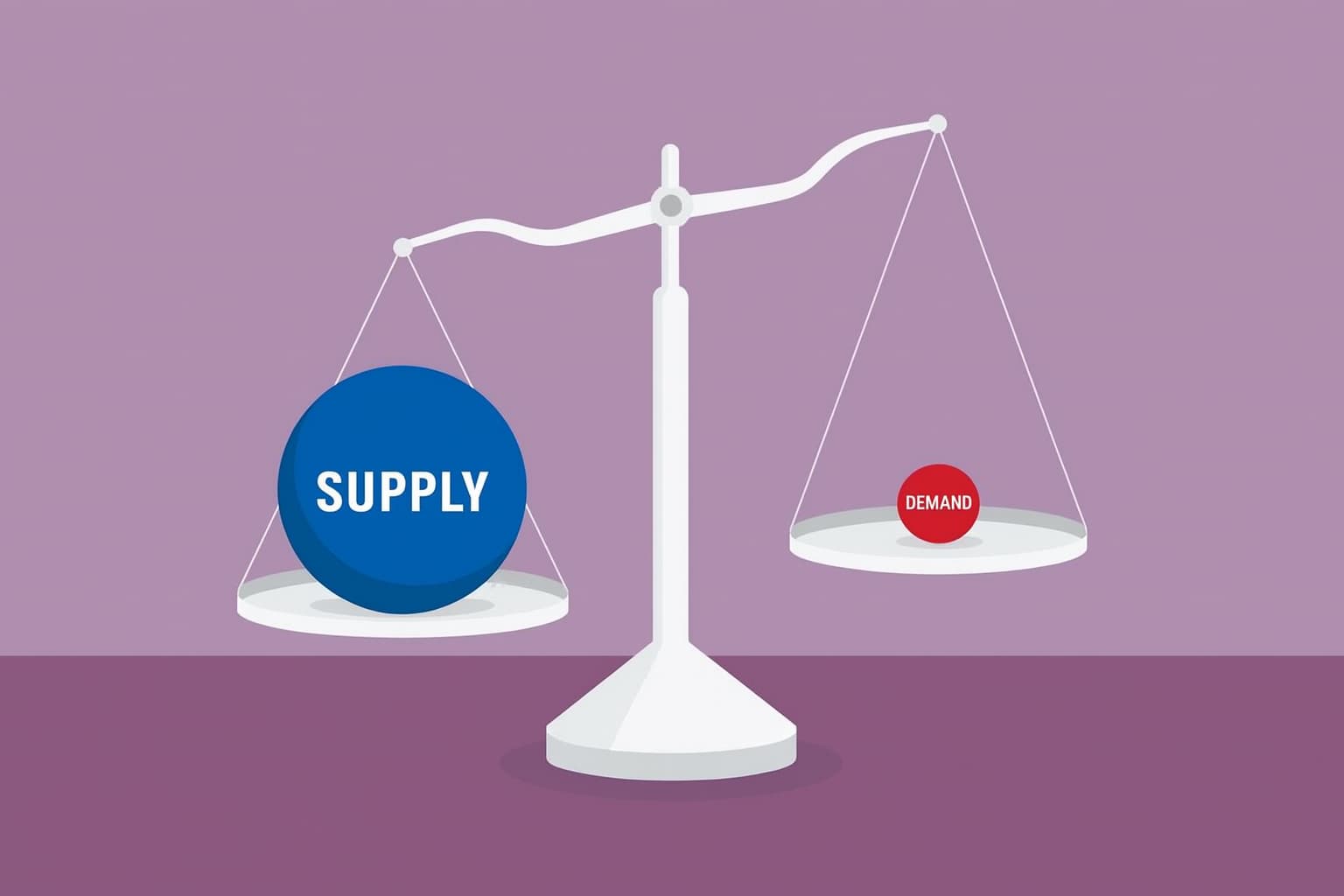
Currently, supply far outweighs demand. Of 1.6 billion total DOT:
-
830m DOT are staked (19m by Bifrost, 4.4m by Acala)
-
11.4m DOT are used by parachains for purposes other than staking (Hydration 7.3m DOT, Acala 3.1m DOT, Bifrost 1m DOT, Moonbeam 900k DOT)
-
100k DOT are used for tx fees and coretime per year.
53.5 % of DOT is currently in use. The remainder sits idle → has no demand other than holding.
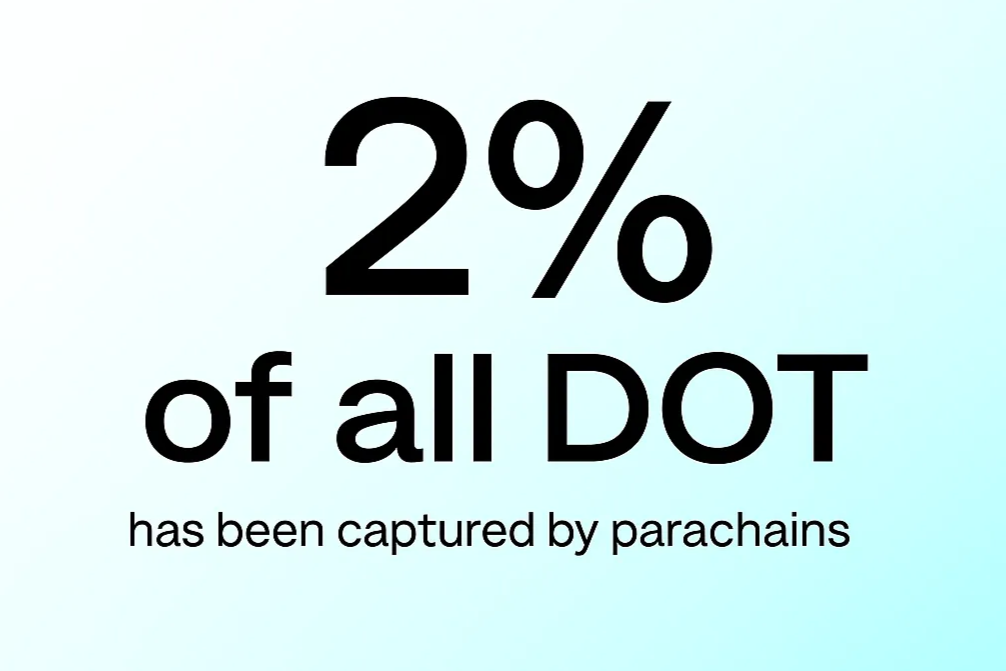
What is noteworthy here is that just over 2 % of all DOT have been captured by parachains!
While we can expect fee volume long-term to pick up, it will still be a considerable time until its effects on the demand becomes visible. A far more impactful variable is the aggregate amount of DOT that is used to create value in the economy.
Why don’t parachains capture more DOT?
They don’t have a reason to. They create their own tokens and focus on their own token economy. They procure a service from Polkadot (parachain hosting, block validation, XCM execution) and pay in DOT. That is the minimal surface area they need to have.
These parachains might be aligned in terms of ecosystem development: They need good tech, strong economic security, spillover effects of users and capital. To the contrary, they might not want to fragment their own token economy by introducing another token in which value can be denominated and exchanged. But they have no direct reason to create value for DOT. We could say they are not DOT-aligned.
This discussion is also very prominent in the Ethereum community. L2s help scale Ethereum but in return capture all the fees. This leaves ETH holders frustrated that very little value accrues to ETH itself.
How can we create DOT alignment?
First of all, we have to think about demand drivers. What creates the biggest demand to capture a lot of tokens? We should approach this by thinking where the value of the token can best be leveraged. Where are there reasons to lock up the token to provide a backing of value for some kind of activity. In the 2010s the discussion was around crypto creating the “Internet of Value”. So we should orient our thinking around value-generating activities.
Some real world examples:
-
DeFi liquidity is proven to be the biggest demand driver after staking. spot markets, money markets, perps use network tokens as abundantly available liquidity to mediate value exchange between other tokens and provide more risk-on opportunities.
-
Stablecoin & RWA collateral - collateralized assets are a great opportunity to increase asset diversity and represent real world values on-chain.
-
Oracles, Courts, Prediction Markets, Futarchy - any kind of truth-generating device might be secured through slashable collateral. Truth is valuable to have on-chain. Similarly, having certain outcomes happen in the future is very valuable to people and can be incentivized.
-
DePIN, supply chain, AI, machine economy, storage, off-chain compute, co-processing: Representing machines and their activities on-chain is how we integrate them into the broader Internet of Value. All of these activities might have avenues where they have to be collateralized or slashable bonds might be deployed.
As long as DOT will not play a significant role in these activities we will not be able to balance out supply and demand.
Paths to greater DOT alignment
Here are some first ideas to explore a more DOT-aligned ecosystem:
-
Hub: Polkadot Hub will be a chain where all fees are paid in DOT. The proximity to the DOT token for smart contracts will make it easy for them to integrate it.
-
Protocols and parachains built on DOT: While parachains and protocols often create their own token, they don’t have to. They could also mediate in DOT. To generate income, they could divert a part of their revenue into a dedicated account.
-
Cloud - DOT fees on parachains: Even if a parachain has their own token, it can be mutually beneficial to allow users to pay tx fees in DOT. This will reduce the UX burden for users and has no downsides for parachains. First of all, they will need to acquire coretime anyways and this would be a way for them to gather DOT. If they don’t need additional DOT, they could also just sell it under-the-hood to buy their own token.
-
OpenGov DOT market operations: OpenGov can provide DOT liquidity or deploy DOT in other activities on parachains to stimulate the economy and put DOT capital to work in the ecosystem.
- OpenGov investments & revenue-generating capital deployment: OpenGov could invest in revenue-generating activities and deploy DOT in this manner. This would create stronger bonds with protocols in the ecosystem.
-
Subsidies: If protocols capture a lot of DOT, they could be subsidized with a reward. This could create a competition between protocols to capture more DOT to receive more subsidies. If executed correctly, it would balance out the effects of reducing block rewards by pulling DOT into the economy and subsidizing it in a more capital-efficient manner than throwing high APRs at staking.
Let’s talk about DOT alignment
This post is intended to begin the discussion. The discussion about ETH alignment is very intense in the Ethereum community. Like any discussion, it can be approached thoughtfully or superficially. Our overall goals should be to create a working economy for the Polkadot ecosystem. I will leave you with these questions:
-
What creates demand for DOT?
-
What in your life (other than money) is valuable to you and could be enhanced by Web3 products?
-
What are smart ways to collateralize DOT to represent something of value?

Appendix 1 - Current DOT utilization
Staking Rate
The network staking rate is 50-60%. It is unclear from the chart, if last year’s inflation reducation had any impact on the staking rate.
At the moment, 830m DOT are being staked and rewarded with 102m DOT/year → 12.3% APR

https://dune.com/substrate/polkadot-staking
Fees & Coretime
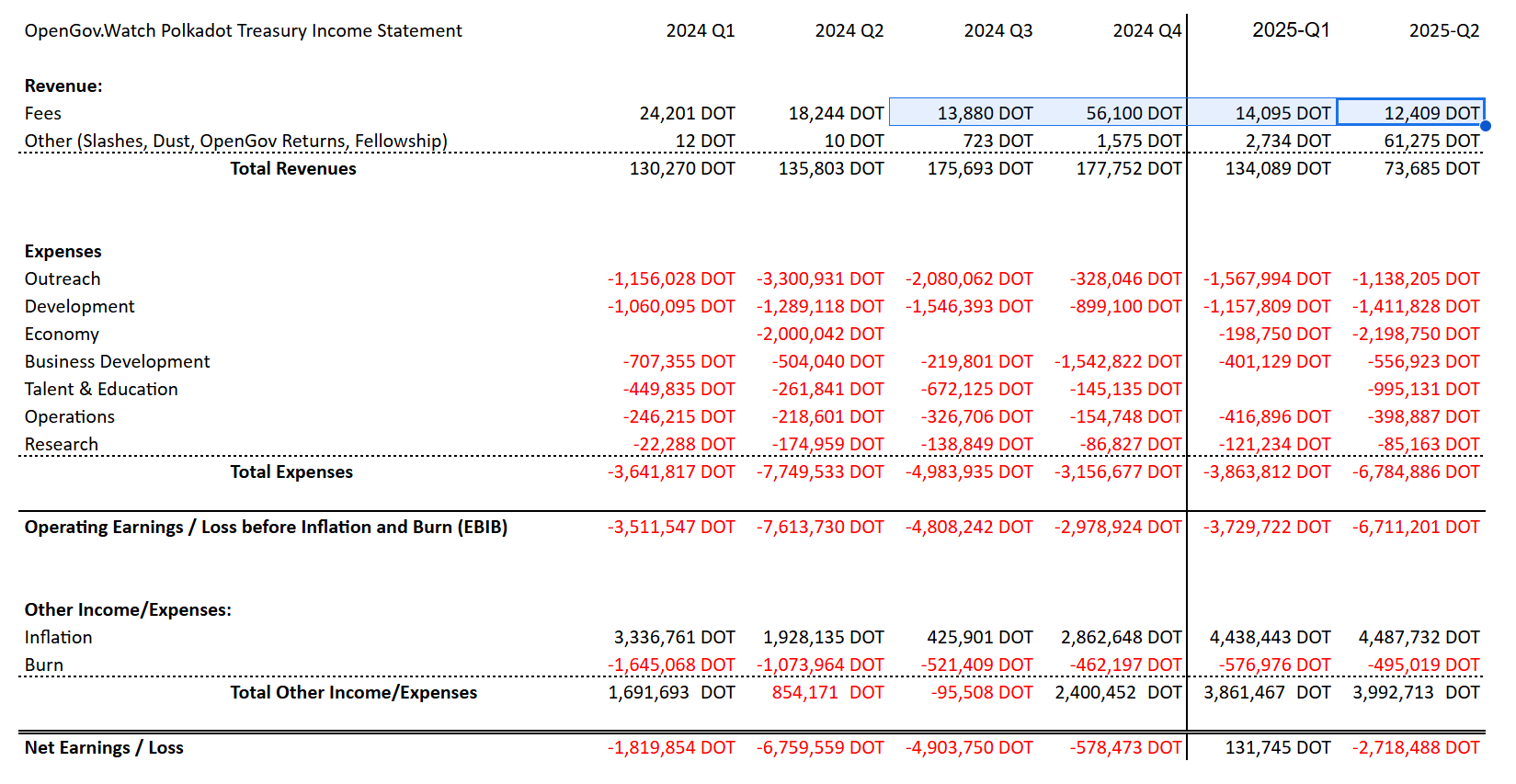
In the last 12 months, about 96k DOT were accrued in transaction fees and about 3.5k DOT were burned through coretime auctions.

DOT in the economy
Parachains over 100k DOT: